
I Wish I’d Had ‘Ramy’ When I Was a Kid
He refuses to be the perfect ambassador for Muslims. It’s refreshing.
If you aren’t writing your story, others will write it for you. That’s what’s happened to Muslims in America for too long.
We’ve been in this country since the 16th century, but we’ve rarely had the opportunity to tell our own stories in history books, movies and television shows. Instead we have been cast as America’s villains, foreigners and invaders.
When I was growing up, my daily diet consisted of halal meat and Hollywood pop culture. In the latter category, we were so starved for Muslim representation that my family applauded when the characters in the comedy “Spies Like Us” accidentally ended up in a highly inaccurate depiction of Pakistan. The bar was so low that I just desired the terrorist villains in ’80s action movies to at least stop shooting bullets in the air. I’m not alone. Muslims who work in film and television often tell me they simply want stories to show Muslims as “human beings.”
Last time I checked, I was a human: Maybe there’s a place for media that convinces the general public of that. But when it comes to what I watch, I want much more.
That’s why I wish that teenage Wajahat — who fasted during Ramadan, but also pined for Jennifer Lopez and Winona Ryder — had been able to watch Hulu’s “Ramy.”
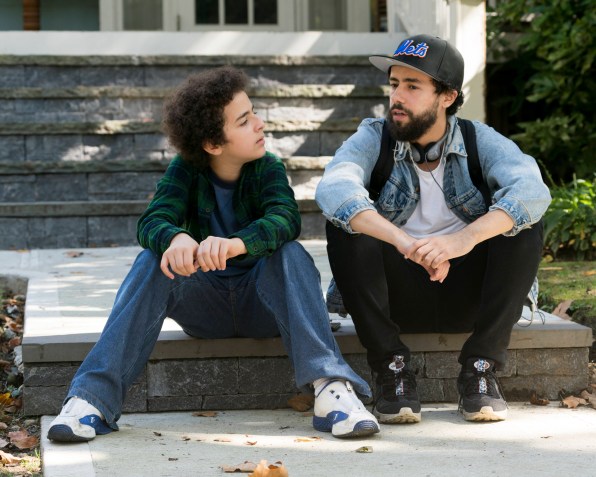
Starring the comedian Ramy Youssef, and now in its second season, it’s about a confused Muslim millennial trying to reconcile his Islamic faith and Egyptian traditions with his sexual frustrations and self-destructive habits. In the second season, which premiered May 29, Mr. Youssef’s character, Ramy, has a religious awakening, but he uses religion as a cover for his continued moral failings, taking “bay’ah” (a pledge) with a pious sheikh played with graceful dignity by Mahershala Ali.
Appreciating his own privilege as an Arab Muslim, Mr. Youssef told me it was also necessary to have his sheikh this season played by the Oscar-winning Mr. Ali. He said Muslims must confront the “large, large amount of anti-blackness in our communities” and it was “the most American choice to have a black sheikh,” whose piety stands in stark contract to his character’s immense flaws.
Mr. Youssef was only 10 years old at the time of the September 11 terror attacks, a traumatic experience of “othering” during his blossoming adolescence encapsulated in a surreal highlight of Season 1 where he imagined eating strawberries and debating violence with Osama bin Laden. The scene intersects his young character’s guilt over masturbation with his anger and confusion over being scapegoated and vilified by classmates as the token Muslim.
I was a 20-year-old college student during that crisis and the message I got from society was clear: Overnight my worth, along with the worth of America’s millions of other Muslims, became linked to security. The good Muslims were uncritical patriots who helped fight terrorism, the bad Muslim were terrorists. And the rest of us were to remain perpetual suspects.
