
Texas Proposes $1,000 Investment Account for Every Newborn Under New Savings Plan
Lt. Gov. Dan Patrick’s proposed “New Little Texan Savings Fund” would mirror the federal “Trump Accounts” program, potentially giving Texas children up to $2,000 in government-backed investment funds at birth
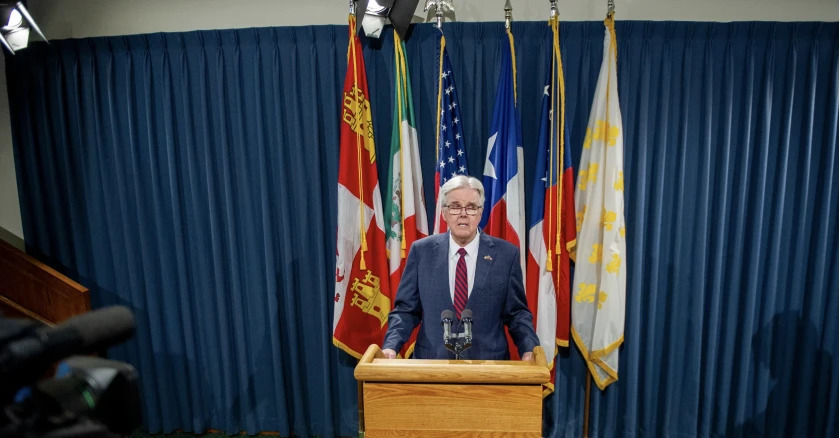
Texas is preparing to step into a new experiment in public-funded investing for children as Lt. Gov. Dan Patrick proposes giving every baby born in the state $1,000 placed into the stock market, a plan modeled on the newly launched federal “Trump Accounts” program.
Patrick announced that he will push the proposal during the 2027 legislative session, calling the plan the “New Little Texan Savings Fund.” The idea is simple: a one-time public deposit of $1,000 for each newborn, invested in the stock market for long-term use in education and other qualifying expenses.
The estimated annual cost is $400 million, which Patrick noted is “less than 1 percent of Texas’ current two-year budget.” He also said he plans to pursue a constitutional amendment to make the program permanent.
Explaining his reasoning, Patrick wrote on social media, “If I see a great idea from the President that helps Texans, my first question is always, ‘why not do it in Texas, too?’ This is a great way to return money back to families and to teach the value of savings and compound interest to young Texans.”
How the Federal “Trump Accounts” Work
The Texas proposal is designed to complement a federal program passed as part of President Donald Trump’s tax and spending legislation. Under that plan, the U.S. Treasury will deposit $1,000 into investment accounts for American babies born between January 1, 2025, and December 31, 2028. The child must be a U.S. citizen and have a Social Security number, and the funds cannot be accessed until age 18.
Families and others will be able to add money starting July 4, 2026, with a combined annual contribution cap of $5,000. Employers may contribute up to $2,500 of that amount. The money must be invested in a low-cost, diversified U.S. stock index fund or equivalent.
Parents and guardians will open the account by filing a new online IRS form (Form 4547). Beginning in May 2026, the Treasury Department will reach out to finalize account creation.
Withdrawals are restricted until age 18 and are intended only for higher education, post-secondary credentials, buying a home, or starting a small business. Taxes on growth are deferred until the money is withdrawn.
The national program expanded rapidly after Austin billionaires Michael and Susan Dell pledged $6.25 billion to support it. Their donation adds $250 per child for many children aged 10 and under who were born before January 2025.
Eligibility is based on ZIP codes where the median income is below $150,000. The initiative is expected to reach children in 75% of U.S. postal codes and benefit at least 25 million children. Their funds will be distributed by the U.S. Treasury, with accounts launching on July 4, 2026.
What Texas Newborns Could Receive
If both federal and state programs move forward, newborn Texans could receive $2,000 at birth, $1,000 from Washington and $1,000 from Austin, in addition to Dell-funded contributions and family savings. Parents would also be allowed to contribute up to $2,500 annually in pretax income through the federal program.
U.S. Senator Ted Cruz, who initially pushed the federal program, praised Texas’ move, saying the accounts would “create a whole new generation of capitalists invested in America’s success.”
However, not all conservatives agree. Texas Policy Research, a nonprofit that promotes limited government, strongly criticized the plan even before a bill was filed,
“Creating state-run wealth accounts for every newborn violates key liberty principles: It expands government rather than limiting it, replaces personal responsibility with state dependency and undermines free enterprise by turning the state into an investor. Texans deserve lower taxes, not new programs that grow government indefinitely.”
Broader Debate Over Savings Policy
Supporters praise “Trump Accounts” for being universal and easy to enroll in, offering families a rare chance at long-term financial security. Critics argue that it is a regressive benefit, since it gives money regardless of family income, and adds complexity to an already crowded savings system.
The Tax Foundation has also pointed out that existing 529 education savings accounts offer more flexibility and tax benefits than the Trump Accounts.
For now, the Texas plan remains a proposal, with real legislative debate expected in 2027. If approved, it would mark one of the most ambitious state-level attempts to build long-term wealth for future generations using public funds—while also deepening the national debate over government’s role in personal savings.
