
Cordoba Mosque-Cathedral Fire Causes Localised Damage, Avoids Catastrophe
A short circuit sparked a fire in Cordoba’s Mosque-Cathedral, collapsing part of the roof, but swift action by firefighters prevented a major disaster at the UNESCO World Heritage site
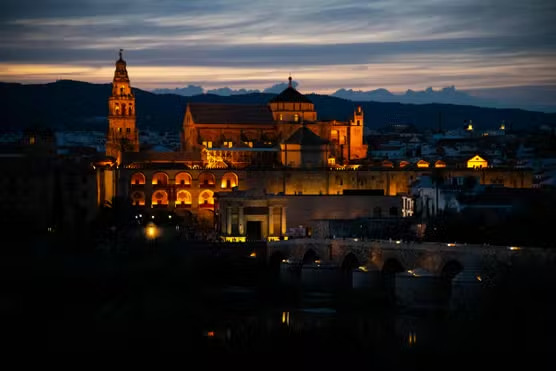
A blaze broke out at the historic Mosque-Cathedral of Cordoba in southern Spain, prompting fears for one of the most treasured symbols of Islamic architecture in Europe. The fire started in the Chapel of Almanzor due to a short circuit in a mechanical floor sweeper.
Flames and smoke, visible from various parts of the city, drew crowds of concerned residents, many of whom shared videos on social media.
Mayor Jose Maria Bellido confirmed, “The monument is saved. There will be no spread, it will not be a catastrophe, let’s put it that way.” He later added on X, “Luckily, the rapid and magnificent intervention of the Cordoba firefighters averted a catastrophe. The fire is now out, and tonight firefighters and local police teams will remain on site to avoid any risk.”
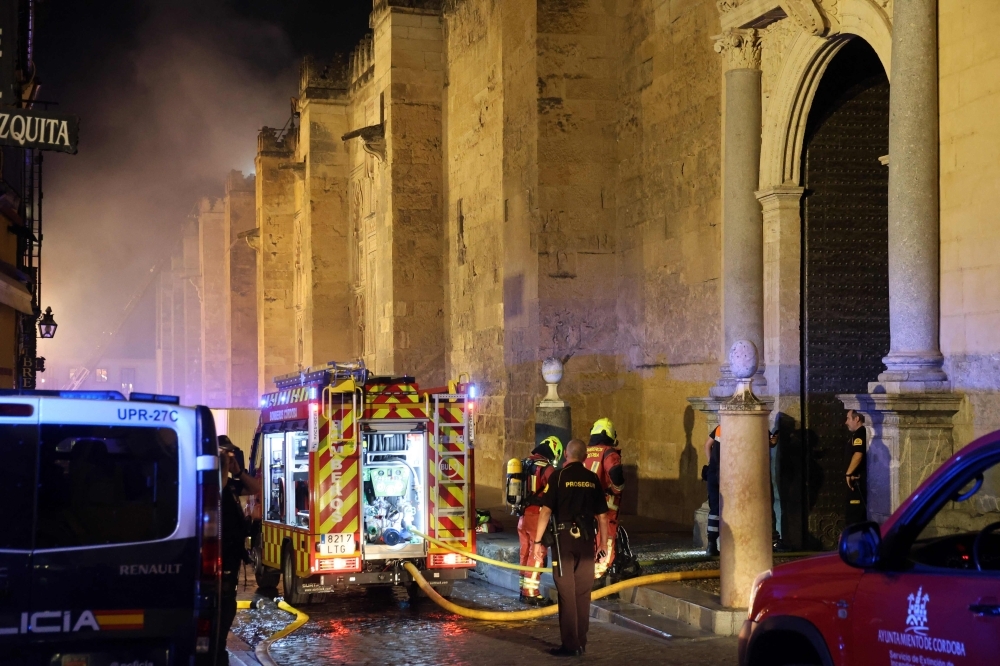 Firefighters work to extinguish a fire
The fire caused the roof of the Almanzor nave to completely collapse, damaging around 50 to 60 square meters of the vast interior. Two adjoining chapels suffered smoke damage to altarpieces and artworks. Five fire engines, a crane, and multiple police units responded, evacuating nearby areas including the Patio de los Naranjos and closing all access to the monument during the operation.
Daniel Munoz, head of Cordoba’s firefighting service, noted that annual fire drills at the site since 2001 allowed crews to respond effectively: “That allowed them to know all the entrances, the hallways, where they could hook up their hoses.” Emergency services remained on-site overnight to cool walls and ensure safety.
By the next morning, the UNESCO World Heritage site reopened to visitors, with only the damaged section cordoned off. Built between the 8th and 10th centuries by the Umayyad ruler Abd ar-Rahman on the site of an earlier church, the mosque was converted into a cathedral in 1236 after the Christian reconquest. It remains a unique architectural fusion of Islamic and Christian heritage, drawing over two million visitors annually.
For Spain’s Muslim community, estimated at between 2.5 to 3 million people, or roughly 5–6% of the population, the site is a powerful reminder of centuries of Muslim contribution to the country’s history.
 Anti-immigrants protests in Spain
Just days ago, the town of Jumilla became the first in Spain to ban Muslims from celebrating Eid al-Fitr and Eid al-Adha in public facilities, a move denounced by Muslim leaders and human rights groups as “Islamophobic and discriminatory.”
Mounir Benjelloun Andaloussi Azhari, president of the Spanish Federation of Islamic Religious Entities, warned, “They’re not going after other religions, they’re going after ours… For the first time in 30 years, I feel afraid.” Critics argue the measure violates Spain’s constitutional protections for freedom of religion, while others see it as part of a rising tide of anti-migrant and anti-Muslim sentiment.
