
Black History Month: “From Slaveship to Harvard” in Four Generations: The Amazing Journey of The Doughty And Devout African American Muslim Yarrow Mamout
In the second of our four-part series to honor this special annual event, we consider the legacy of Mamout, a Muslim whose hard work and diligence brought him freedom after 45 years of slavery.
Portrait paintings in the 18th and 19th centuries were usually reserved for nobility. So how did a former slave have his portrait painted, not once, but on two different occasions in the early 1800s? Yarrow Mamout was a fascinating man who at the time enjoyed a celebrity status in Georgetown, Washington, D.C. One of the artists who painted him in his later years, (he lived to be over a 100) Charles Willson Peale, attributed his longevity to his strong religious beliefs and his good temperament [4].
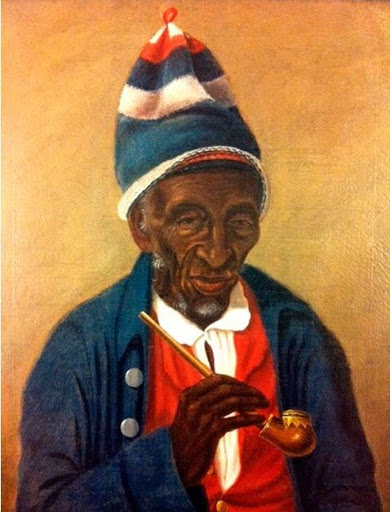 Image courtesy of Philadelphia Museum of ArtMamout was well known for his firm belief in Islam. He was asked many times to convert to Christianity but refused. Peale quoted him saying, “Man is no good unless his religion come from the heart.” Peale said that Mamout “professes to be a Mohametan, and is often seen and heard in the streets singing praises to God — and conversing with him.” He adds, “the acquaintances of [the Muslim] would banter him about eating bacon and drinking whiskey — but Yarrow would say, ‘it is no good to eat hog — and drink whiskey is very bad” [5].
Although we don't know why Mamout was able to keep his name, (or at least an Anglicized version of his name), we can imagine that such an outspoken person would not have easily accepted anything other than his birth name[5].
Mamout’s industriousness and experiences likely helped him accomplish financial success for himself and his descendants [5]. Locals were amazed by his vigorous lifestyle, which included him swimming in the Potomac River when he was in his 80s [1]. He would work on his days off to save money to pay for his freedom. Once freed, he saved up to pay for his son’s freedom.
As both a plantation slave and a personal body servant to wealthy businessmen, he learned how products and commerce traveled from the plantations to the point of trade [2]. At the end of his life, he was able to make enough money to loan money to others and broke the color barrier by even lending to Whites. In 1823, his obituary read, “It is known to all that knew him, that he was industrious, honest, and moral.”
Mamout arrived in Annapolis, Maryland, from Senegal-Gambia in 1752 aboard a ship called the Elijah when he was only about 14 years old. According to several descriptions, he had a number of skills, but spent most of his life as a body servant to Samuel Beall, and, after his death, to several of his descendants. As servant to Samuel Beall, Jr., Mamout was likely privy to his large-scale business dealings with several important investors, such as George Washington and George Mason. It's believed he would have met Washington himself while living at the home of Brooke Beall, one of Samuel Beall’s sons. Documents also show that he was hired on his days off by John Semple, the writer of the Virginia Bill of Rights [2].
After 45 years of slavery, Mamout was manumitted — or legally emancipated — after fulfilling a stipulation in Brooke Beall’s will that required him to make enough bricks to build a house. Mamout continued to lay bricks, weave baskets and make fishing nets for sale. When he purchased his son, Aquilla’s, freedom, Mamout ensured he was taught to read and write [2].
He lost his savings twice after trusting merchants who went bankrupt. However, resiliently he recovered from these setbacks and became one of the first investors to purchase shares in the Columbia Bank of Georgetown, which was established by Alexander Hamilton [5].
Mamout was able to maintain contact with some of his family members from Africa throughout his life. One of his shipmate slaves was believed to be his sister, Hannah, who worked in a Tavern in Rockville, Maryland about thirteen miles north of Georgetown. She later moved to Georgetown as a free woman. In 1850, a court in Washington, D.C. declared Yarrow’s niece, Nancy Hillman, was entitled to enforce a loan Yarrow had made on a warehouse in Georgetown after his death.
Mamout’s wife was Jane Chambers. She was also freed on the death of her master Ann Chambers. At 52 years old, Mamout was able to have a son and maintain a connection with him [2].
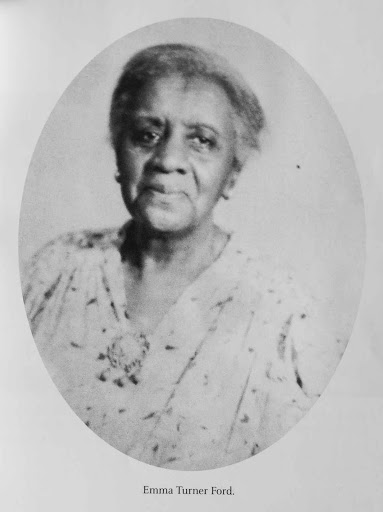 Pictured: Emma Turner Ford, Mamout's nephew's daughter / image courtesy of Georgetown
Unlike most slaves, many of Mamout’s descendants were literate. Because he had worked hard to give his son the privilege of literacy, Aquilla was able to leave Georgetown and purchase a small farm called Pleasant Valley in Washington County. Aquilla’s son, Simon Turner, later enlisted in the Union Army during the Civil War. After the war, Simon returned to Pleasant Valley to establish a school for his children. Simon’s daughter, Emma Turner, who was academically gifted, was sent to Storer College in Harper’s Ferry to obtain a teaching degree. It was Emma Turner's son, Robert Turner Ford, who in the fall of 1923 would crown the educational achievements of Mamout's legacy by attending Harvard University.
In his book, “From Slaveship to Harvard” (2012), James Johnston describes how literacy made it possible for Mamout’s family to make these leaps in only 171 years, or four generations.
In August 2015, members of the local Muslim community, inspired by Mamouts legacy conducted a “Janazah” (funeral prayer) for him while Howard University researchers were conducting an archeological dig on his former property [3]. Today, many of Yarrow Mamout’s descendants live in Baltimore, Maryland, and unlike many Black Americans who descended from slaves, they can trace their lineage directly to the first in their family line to have arrived in America [2].
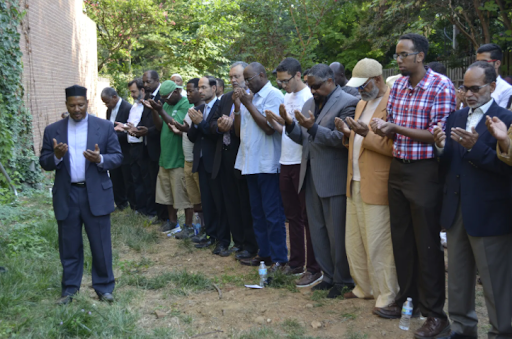 Mamout's "Janazah" in 2015 / image courtesy of Masjid Muhammad
The portrait by Peale is now located in the Philadelphia Museum of Art. Anot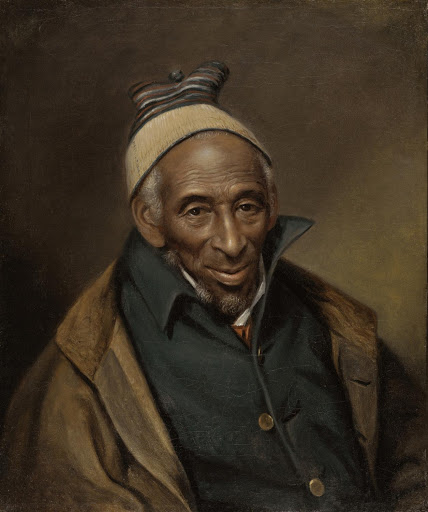 Peale's portrait of Mamout / image courtesy of Philadelphia Museum of Arther by James Alexander Simpson hangs at the National Portrait Gallery in Washington, DC. The kind eyes peering through the painting give inspiration to its viewers, Black or White, Muslim or Christian, all can appreciate the industrious, resilient and moral person that Yarrow Mamout was recognized to be.
Note: Other stories like this can be found in Pater-Rov’s book “Islamic American Heritage: Prominent Slaves and Our Founding Fathers,” a textbook for Islamic schools. It is available for purchase on Amazon. Related materials can also be found on www.islamicschoolresources.com/secondary-grades.
References:
[1] Gates, H. L. (2013). Life Upon These Shores: Looking at African American History, 1513-2008. Alfred A. Knopf.
[2] Johnston, J. H. (2012). From Slave Ship to Harvard: Yarrow Mamout and the History of an African American Family. Fordham University Press.
[3] Kunkle, F. (2015). As dig continues, Islamic service honors slave in Georgetown. Washington Post August 14, 2015.
[4] Lesko, K.M., Babb, V, and Gibbs, G.B. (2016). Black Georgetown Remembered A History of its Black Community from the founding of, “The Town of George, in 1751 to the Present Day. Georgetown University Press.
[5] Turner, R. B. (2003). Islam in the African-American Experience. Indiana University Press.

Mahnaz Pater-Rov is an advocate for teaching youth about the history of Islam in America. She works as an educational diagnostician in a public school system, but she also has formal training and certification as a school administrator.
