
Islamophobia, Media Narratives, and the Power of Counter-Storytelling: A Conversation with Professor Khalid Beydoun
Professor Khalid Beydoun, one of the world’s leading legal scholars on civil rights and Islamophobia, speaks with AMT about U.S. politics, media bias, how digital platforms are reshaping the fight for truth
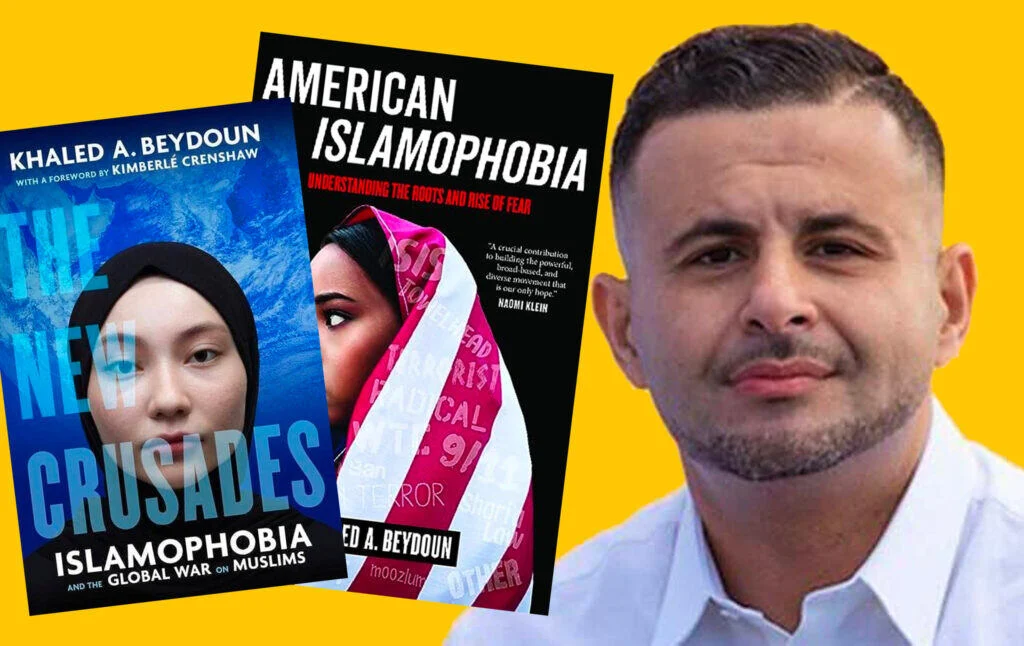
Professor Khalid Beydoun is widely recognized as one of the foremost legal experts on civil rights, national security, and Islamophobia. He currently serves as an associate professor of law at Arizona State University’s Sandra Day O’Connor College of Law.
Beydoun is the author of several influential works, including American Islamophobia: Understanding the Roots and Rise of Fear, co-editor of Islamophobia and the Law published by Cambridge University Press, and most recently, The New Crusades: Islamophobia and the Global War on Muslims.
His insights have been featured in CNN, BBC, The New York Times, and The Washington Post. Recognized among the 500 most influential Muslims in the world, he is also a recipient of the Frederick Douglass Educator Award.
In this conversation with American Muslim Today, Professor Beydoun discusses Islamophobia in American politics, the role of media conglomerates, the transformative and perilous power of social media, and how journalists and academics can work together to challenge harmful narratives.
Trump vs. Zohran Mamdani: Islamophobia in U.S. Politics
Q: Congressman Zohran Mamdani has faced Islamophobic attacks during his political campaign. What do you make of this trend, and what might it signal if he were elected?
Beydoun: “We've already seen a lot of Islamophobic attacks being darted Mamdani's way since the beginning of the campaign, connected to his stances on Israel and his opposition to the genocide in Gaza.”
“If he is elected, it’s definitely going to continue. Even if he said and did all the right things, he would still be subject to Islamophobia as a consequence of who he is as a Muslim American male.”
Islamophobia in the Media: What Must Change?
Q: You’ve spoken about how media corporations play a role in perpetuating Islamophobia. What kind of change is needed?
Beydoun: “There needs to be a structural check on massive corporations and conglomerates that curate the kind of news we consume. Islamophobia has been fueled because corporate interests have had a strong investment in demonizing Muslims, particularly during the War on Terror, to justify wars in Afghanistan and Iraq. We see the same phenomenon now with the demonization of Palestinians at large.”
“Now that we're shifting toward digital media, where people are consuming news on platforms like X, Instagram and TikTok and so on, that same critique still holds because Meta, X, tick-tock, these are corporations and their primary objective is to maximize profit.”
How Social Media Is Changing Journalism
Q: How do you see social media shaping journalism, especially in relation to Gaza?
Beydoun: “One of the positives is the organic news coverage coming directly from individuals on the ground in Gaza. They’ve been able to tell their own stories in ways that major legacy outlets never would. For the first time, people in the West—Americans and Europeans—are hearing native Palestinian voices directly.”
“That was never the case before the rise of social media. But there are also perils. Propaganda from governments and far-right movements spreads quickly, mobilizing people in dangerous ways.”
The Impact of State Messaging on Young People
Q: Government agencies like DHS and the White House are using social media for recruitment and propaganda. How does this affect young audiences?
Beydoun: “They’re definitely vulnerable to that messaging. When Trump signed the executive order targeting undocumented students, for instance, far-right groups on my campus at Arizona State University encouraged members to identify and harass students they believed were undocumented.”
“Much of this was based on racial profiling—targeting brown, Latino, Middle Eastern, and Native American students. Propaganda from government agencies and administrations with divisive rhetoric has a deputizing effect, encouraging vigilante violence from young people who already hold bigoted views.”
How Scholars and Journalists Can Work Together
Q: How can legal scholars and journalists collaborate to shift harmful narratives?
Beydoun: “We live in dangerous times where nuance and meticulous analysis are often rejected in favor of quick, digestible answers. As an academic, that’s a struggle—how to translate complexity into something accessible.”
“Journalists, however, are trained to do this. That’s why collaboration is crucial. Academics can provide depth, while journalists can make these ideas accessible to mass audiences. Together, we can challenge dominant narratives more effectively.”
Digital Media and Counter-Storytelling
Q: Digital platforms can both amplify and challenge Islamophobic tropes. How do you see this playing out?
Beydoun: “Digital media is a double-edged sword. Figures like Trump, the Israeli military, or the U.S. military use it to push Islamophobic tropes. But it also creates space for counter-storytelling.”
“For example, Muslims in places like Gaza, Yemen, or Morocco—who have long been demonized in mainstream media—can now share their narratives directly. That opportunity for erased voices to build audiences and push back with their own stories is something worth noting and preserving.”
